
The Rearview #2: The Uninvited Guest
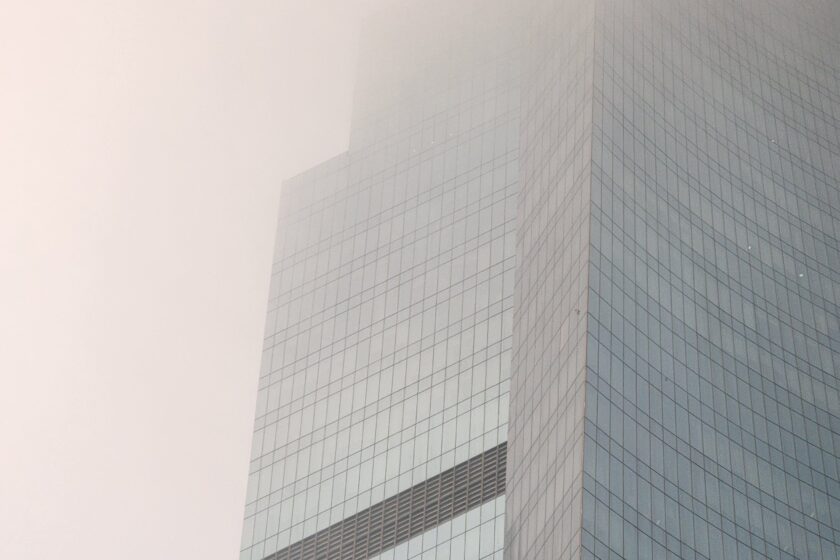
We have learned to live with the haze the way one lives with a noisy neighbour. We close the windows, buy masks, check the API before the morning walk, and wait for the monsoon to rescue us.
But the haze is not just a nuisance or a health warning. It is a bill. And like most bills we do not open, it keeps growing.
How it touches all of us
The cost of the haze is not only counted in boardrooms. It starts at the breakfast table.
When the API climbs and schools shut, as all of Johor’s schools did for two days this month, children do not simply stay home. Someone has to look after them. A working parent applies for leave, or takes the child to the office, or leans on a grandparent who should be indoors too. Multiply that across thousands of families and you have a quiet loss of working days that no statistic captures.
The pattern repeats everywhere. Families who would have eaten out stay home, and the corner restaurant feels it. The hawker, the hair salon and the e-hailing driver lose a day’s takings. Construction slows and deliveries run late as visibility drops. Farmers watch vegetable and fruit yields fall, and some of that loss reaches our grocery bills later. Clinics fill with coughs and wheezing children, and families pay for masks, air purifiers and medicine they did not budget for.
At work, the cost is harder to see. People turn up but cannot think clearly through a headache and a sore throat. Meetings are postponed, travel is cancelled, and plans wait for clear skies.
Add it up and the bill is large. Economist Dr Yeah Kim Leng of Sunway University puts it at RM20 million to RM50 million a day, possibly RM600 million to RM1.5 billion a month, and calls that conservative. We have paid this bill before: around RM1 billion in 1997, and some RM1.57 billion in healthcare costs and lost income in 2013.
Why it keeps coming back
The haze is a man-made problem dressed up as weather. Most of it comes from land and peat fires in Sumatra and Kalimantan, often set to clear land cheaply for plantations. Dry years make it worse, and this year a strong El Niño has turned the region into a tinderbox.
We have had an ASEAN agreement on transboundary haze for more than two decades. Indonesia has opened criminal investigations this year and named suspects, and its President has called slash-and-burn clearing “ecological terrorism”. Our Prime Minister has agreed with Brunei to raise the matter again at ASEAN.
These are welcome. But we have heard strong words before, usually in September, and forgotten them by January. The haze returns because burning remains cheaper than clearing land properly, and because the people who pay for the smoke are not the people who light the fire.
What we can do
We cannot blow the smoke back across the Straits. But we can stop treating the haze as an annual surprise.
- Employers can plan for it. Flexible hours and work-from-home arrangements during haze alerts would spare parents from burning annual leave every time schools close. A simple haze policy costs little and earns loyalty.
- Businesses can prepare. Air filters in offices and factories, masks for outdoor staff, and contingency plans for deliveries and site work should be as routine as flood plans.
- Investors and lenders can ask questions. Banks and funds that finance plantations, here and across the border, can demand proof of no-burn practices and walk away from those who cannot give it.
- Consumers can choose. Buying from companies with certified sustainable supply chains sends a signal that reaches the plantation gate.
- Government can keep up the pressure. Not just at ASEAN meetings in the smoky months, but all year round, with enforcement that makes burning more expensive than not burning.
Underneath all of this is ESG, and the haze is its sternest test. Every listed company now publishes a sustainability statement, and most plantation groups pledge zero burning and no deforestation. But a glossy report does not stop a fire. ESG adopted in substance, with traceable supply chains, independent audits, real penalties for suppliers who burn, and boards that hold management to account, can. ESG as lip service, a box ticked for the annual report, only lets the smoke return each year with a clean conscience attached. The haze is where we find out which kind we really have.
Clearing the air
The monsoon will come, as it always does, and the skies will clear. We will open the windows, put away the masks, and forget until next August.
That forgetting is the most expensive habit of all. Every year we pay the bill in leave days, lost sales, hospital visits and weaker growth, and every year we treat it as bad luck rather than a cost someone chose to pass on to us.
Clean air is not a luxury. It is part of the infrastructure that lets an economy work: children in school, parents at their desks, shops open and planes flying. We should start valuing it that way, and demanding it that way, before the next season of smoke.
References:
- Billion-ringgit cost of the haze, The Star, 14 October 2026.
- Haze watch: 29 areas recording unhealthy or worse air, Larkin, Pasir Gudang API hits 202, Malay Mail, 16 October 2026.
- 2026 Southeast Asian haze, Wikipedia, accessed 18 October 2026.
Dr Paul PK Lim is the de facto towkay of Accoris Management Sdn Bhd, and he loves to daydream.